

What “At-Will Employment” Actually Means

“At-will employment” is buried in nearly every offer letter, sounds vaguely ominous, and actually cuts both ways more than people realize.

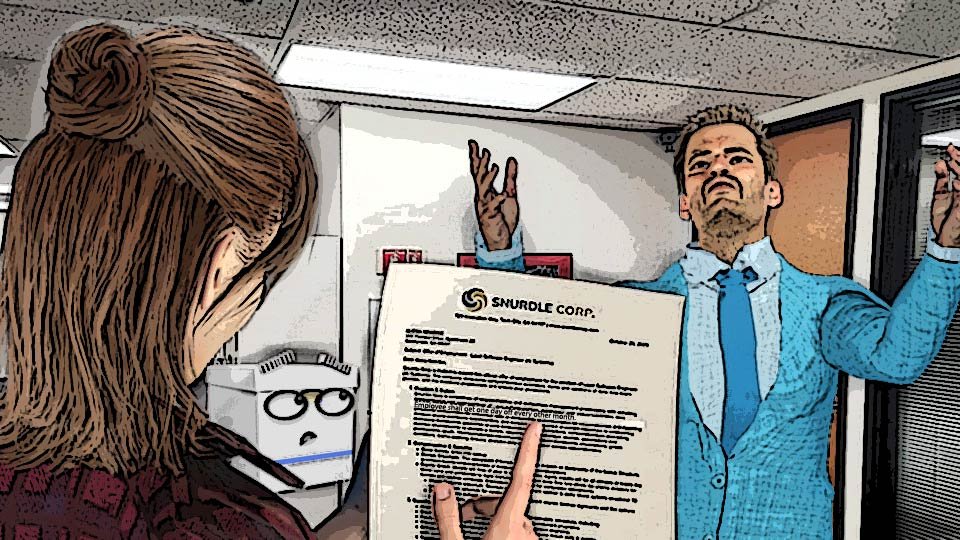
Alexa found the phrase in her offer letter, tucked between two paragraphs she’d already skimmed: “This is an at-will employment relationship.”

She read it twice. It sounded like something a lawyer had written specifically to worry her. So let’s do this properly. Sit down. We’re going to walk through exactly what that sentence means, one piece at a time, and none of it is as ominous as it sounds.

⚖️ The Actual, Two-Way Definition

At-will employment means the employer can end the working relationship at any time. It also means they can do it for any legal reason, or no reason at all. No advance notice is required. That’s the part that sounds one-sided, and it’s the part that scared Alexa.

Here’s what she missed on the first read: it goes both directions.

You’re equally free to leave whenever you choose. You don’t need a specific justification either. It’s not a leash. It’s a door that swings open from both sides.

🇺🇸 How Standard This Actually Is in the U.S.

At-will employment isn’t a red flag buried specifically in your offer letter. It’s the default arrangement in nearly every U.S. state. Montana is the one notable exception.

So this isn’t your company being unusually aggressive. It’s just the standard legal backdrop underneath almost every job in the country.

🚫 What It Doesn’t Override

At-will status has real limits, even though the phrase sounds absolute. It doesn’t permit illegal firing.

Termination based on discrimination against a protected class is still illegal. Retaliation for reporting illegal activity is still illegal.

Violating a specific contract term you actually have in writing is still illegal too.

“At any time, for any reason” has a legal floor underneath it, even when the phrase itself doesn’t mention one.

📄 What Actually Changes This Default

A specific employment contract with defined terms can override at-will status entirely.

This is common for higher-level executives. It’s also common in some union positions and specific industries. In those cases, the contract’s actual terms govern termination, not the at-will default.

Most entry-level and mid-career jobs don’t have one of these contracts. They operate under the plain at-will default, full stop.

That’s not unusual. That’s just most jobs, including, statistically, yours.

🚪 Why It’s Worth Understanding Rather Than Fearing

At-will status is genuinely a two-way street.

It protects your ability to leave just as much as it protects the company’s ability to let you go.

Understanding it accurately does two things at once. It removes some unnecessary anxiety about a phrase that sounded scarier than it is. And it leaves you with a realistic, accurate picture of the actual relationship you’re walking into — which, it turns out, was the goal of this whole conversation.

🔗 Related Reads


ScrumbleDoc is part of the WhistleBump Group — find the rest of the family at WhistleBump.com.

58005

©2026 John D Reinhart/ScrumbleDoc.com — All rights reserved
Negotiating a Job Offer Without Feeling Like a Jerk

Negotiating a job offer feels like it might blow the whole thing up. In practice, it’s an expected, normal part of the process almost everyone quietly does.

Alexa read her offer letter three times, felt a wave of relief so enormous it was practically load-bearing, and then made the mistake of scrolling one paragraph further — to the number.

It wasn’t a bad number. It just wasn’t the number she’d hoped for.

And the thought of actually saying something about it, out loud, to the actual company, made her stomach do the thing where it feels like it’s trying to leave the building without her.

Negotiating felt less like a normal business conversation and more like the kind of move that might make the whole offer quietly evaporate, as if gratitude and greed were somehow the same emotion wearing different outfits.

😌 The Honest Reassurance Worth Hearing First

Here’s the thing Alexa didn’t know yet, standing there rereading the same paragraph for the fourth time: negotiating isn’t a bold, risky move that companies quietly resent.

It’s an expected, completely normal part of the hiring process — so expected, in fact, that most companies build a little room into their first offer specifically because they anticipate someone will ask. A reasonable employer isn’t offended by the question. They were kind of waiting for it.

That doesn’t make the nerves disappear. It just means the nerves are responding to a threat that mostly isn’t real.

🎯 What’s Actually Negotiable, Beyond Just Salary

Base salary is the obvious target, and it’s where most people’s brains go first — but it’s not the only lever in the room, and fixating on it alone can mean missing better, easier wins elsewhere.

Start date, a signing bonus, extra vacation days, remote work flexibility, or a professional development budget are all genuinely negotiable in plenty of situations.

Sometimes a company that’s genuinely firm on salary has real room to move on start date or PTO instead, simply because those come out of a different budget. Worth thinking about the whole package before deciding where to push.

🗣️ How to Actually Say It, Without Overthinking the Wording

Stating your concern is usually the part that stalls people out completely — not the decision to negotiate, but the fear of somehow phrasing it wrong.

The good news is that it doesn’t take a script, a rehearsed pitch, or a confrontational tone. Something simple and direct works fine: “I’m genuinely excited about this offer. Based on my research and experience, I was hoping we could discuss the base salary — is there flexibility there?”

That’s it. Warm, clear, and it does the one thing that actually matters: it names what you want without demanding it, and it leaves the door open for a real conversation instead of a standoff.

📊 Why Research Makes the Ask Feel Genuinely Reasonable

Part of what made Alexa’s stomach lurch was that her ask felt like it was coming from nowhere — just a feeling that she deserved more, with nothing behind it.

That’s exactly what research fixes. Knowing the typical salary range for the role, in your specific location, through one of the sites built for exactly this kind of research, turns a vague “can I have more?” into a specific, defensible “based on market rate for this role, I was hoping for X.”

A number grounded in real data doesn’t feel like an opinion you’re defending. It feels like a fact you’re reporting.

⏳ Why Timing Matters

Negotiate after you’ve received a formal, written offer — not during the earlier interview stages, when the company hasn’t fully decided on you yet.

Your leverage is at its highest the moment they’ve already picked you specifically and are hoping you say yes.

Asking too early, before an offer even exists, can come across as presumptuous. Asking after a real offer is just standard practice, on a timeline everyone already expects.

🙅 What Happens If They Say No

Here’s the scenario Alexa was actually most afraid of, underneath everything else: what if she asks, and they simply say no?

In practice, a reasonable employer just says the offer is firm. That’s it. It’s a genuinely normal outcome, not a sign the whole opportunity has curdled or that anyone’s mad at her.

At that point, she’d be exactly where she started — deciding whether the original offer works for her — except now with one more piece of information than she had before asking. Nothing lost. Possibly something gained. That’s the actual math of it, once the nerves get out of the way.

🔗 Related Reads


ScrumbleDoc is part of the WhistleBump Group — find the rest of the family at WhistleBump.com.

58006

©2026 John D Reinhart/ScrumbleDoc.com — All rights reserved

Understanding Your Employee Handbook (Without Reading the Whole Thing)

Nobody actually reads the entire employee handbook cover to cover. Here’s what’s genuinely worth knowing, and where to find it fast when it matters.

Alexa was handed a seventy-page employee handbook on her first day. She signed the acknowledgment form confirming she’d “read and understood” the entire thing about ninety seconds after receiving it.

Now, mathematically, she’d have had to read roughly one page every 1.3 seconds with full comprehension.

She has never opened it again since. If you’re picturing a woman speed-reading a legal document like it’s a flipbook, you understand the joke and also, unfortunately, the industry standard.

😅 The Honest Truth: Nobody Reads the Whole Thing Cover to Cover

Here’s the secret nobody says out loud: a seventy-page handbook was never actually built to be read front to back like a novel.

It’s a reference document — something you’re meant to search when a specific question comes up, not something you’re expected to have memorized before lunch on day one.

So what does that signature on the acknowledgment form actually mean, if not “I absorbed all seventy pages”?

Mostly, it’s the company confirming you received access to the document and were told it exists, not that you’ve internalized it. Nobody’s actually fooled by the ninety-second read. It’s a formality, not a comprehension test.

🏖️ The Sections Genuinely Worth Actually Reading Now

Three categories are worth an actual, real read on day one, not a someday-when-I-need-it read:

PTO and sick leave policy — specifically how it accrues (do you earn it gradually or get a lump sum up front), how to actually request it, and whether there are any blackout periods where time off isn’t approved.

Workplace concern or harassment complaint reporting process — who you’d actually go to, and how that process works, before you’re in a situation where you need it in a hurry.

Remote work or flexible schedule policy, if it’s relevant to your role — the specific rules around it are worth knowing precisely, not roughly, since “probably fine” is a bad standard to operate on.

These three come up often enough, and matter enough when they do, that they’ve earned a real read instead of a look-it-up-later.

🔍 The Sections Worth Knowing Exist, Even If You Don’t Read Them Yet

Code of conduct, dress code, technology and email usage policy, and disciplinary procedures all fall into a different bucket: you don’t need every clause memorized on day one, but it’s genuinely worth knowing roughly where each of these lives in the document.

That way, if a specific question ever comes up — can I use my work laptop for personal email, what actually counts as a dress code violation — you know exactly where to go look instead of digging through seventy pages cold.

📄 Handbook vs. Contract: An Important, Easy-to-Miss Distinction

Most employee handbooks include a line stating, in some form, that the handbook is not a binding contract and that the company can change any policy in it at any time.

That’s an important distinction, easy to miss buried in the fine print: the policies inside are genuinely useful day-to-day guidance, but they don’t carry the same legal weight as your actual signed employment contract or offer letter.

If the two ever conflict, the offer letter is the document that matters more.

🔎 How to Actually Use It Going Forward

Treat the handbook like a reference manual, not required reading.

When a specific question comes up — how many sick days do I actually have left, what’s the real process for reporting an issue — that’s the moment to go look it up, using the search function if it’s a digital copy, rather than trying to hold all seventy pages in memory from day one just in case.

That’s what it’s there for.

🔗 Related Reads


ScrumbleDoc is part of the WhistleBump Group — find the rest of the family at WhistleBump.com.

58001

©2026 John D Reinhart/ScrumbleDoc.com — All rights reserved

Reading an Offer Letter Before You Say Yes

A verbal “yes” feels official. It legally isn’t. Here’s what actually binds you — and what to check before you sign anything.

Alexa got the call, heard a number she liked, and said an excited, immediate yes right there on the phone — the kind of yes that comes with a little fist pump nobody on the other end could see.

It wasn’t until days later, holding the actual written offer letter, already having told her parents, her roommate, and possibly a stranger at the coffee shop, that she read the real details of the job she’d apparently already committed her whole personality to.

📞 Why the Verbal Offer Isn’t the Real Document

A verbal offer is real and it’s meaningful — nobody’s lying to you on that call. But it’s also not the enforceable version. Legally, an offer of employment generally doesn’t become binding until it’s in writing and signed; a phone call is an expression of intent, not a contract. The HR person on the phone isn’t wrong, exactly — they’re just not the document that actually governs the job.

Which means it’s genuinely fine, even smart, to say “I’m thrilled, I’d love to see everything in writing before I give my final answer” instead of treating the call itself as the moment you’re locked in. The written offer letter is the company’s actual side of the deal — read it like it matters, because legally, it’s the part that does.

💰 Salary: The Actual Number, and How It Actually Arrives

Confirm the exact base salary, and whether it’s written as an annual figure or an hourly rate — those read very differently on paper and it’s worth doing the math yourself rather than assuming. Check how often you’re actually paid: weekly, biweekly, or monthly all mean a very different-looking bank balance on any given week, even at the identical annual number.

Also confirm your employment classification: exempt or non-exempt. Non-exempt means you’re paid hourly and legally entitled to overtime pay for hours worked beyond 40 in a week; exempt usually means a fixed salary with no overtime pay, regardless of how many hours the job actually takes. It’s a genuinely important distinction, and it’s usually spelled out in a single line you could easily skim past.

Whatever the letter says, check it against what you were actually told over the phone or in the interview. Misunderstandings between a verbal number and the final written one aren’t rare, and nobody enjoys discovering the gap on their first payday.

📅 Start Date and Employment Type

Make sure the letter specifies an actual, calendar-date start date — not a vague “sometime in the next few weeks,” which isn’t something you can plan a move, a lease, or a two-weeks’-notice around.

Also confirm whether you’re being offered as full-time, part-time, or a contractor — a distinction that sounds like paperwork but genuinely changes your entire tax situation and whether you’re eligible for benefits at all (worth a full read in its own right, since it’s a bigger topic than one line in an offer letter can cover). Don’t assume the version you discussed out loud is the version that made it onto the page.

🏥 Benefits: What’s Actually Promised in Writing

Health insurance eligibility, and when it actually kicks in — some companies have a waiting period of a month or more after your start date before coverage begins, which matters a lot if you’re timing anything medical around a job change.

Retirement plan details, including whether the company matches any of your own contributions.

Paid time off policy, including whether it’s a lump sum granted up front or something that accrues gradually over the year.

Check that all of it roughly matches what was discussed verbally. The offer letter is the version you’ll actually be able to point back to later, so it’s worth getting right now rather than just assuming it’s correct.

📝 The Fine Print Worth Actually Reading

A few terms that often show up here, sometimes as a separate attachment, and are worth understanding rather than skimming past in the excitement of an accepted offer:

At-will employment means either you or the company can end the job at any time, for almost any legal reason, with no advance notice required on either side — it’s the standard arrangement in most states, not a red flag on its own, just worth knowing it’s there.

A non-compete restricts you from taking a job with a competing company for some period of time after you leave. A non-disclosure agreement (NDA) restricts you from sharing confidential company information, during your employment and often after. Both are common and often standard — the goal isn’t to be alarmed by them, it’s to actually know what you signed instead of finding out later.

❓ What to Do If Something’s Unclear or Different Than Expected

Asking a direct, simple question before you sign — “I want to confirm this reflects what we discussed about X” — is a completely normal, professional move, not an awkward one.

It’s far easier to clarify or adjust something before your signature is on the page than to raise a discrepancy after you’ve already accepted. Companies expect these questions. Asking one doesn’t cost you the job — it’s just due diligence, the same kind you’d want from them.

🛠️ Gear Worth Having

Post-it Flags Multi-Pack — flag salary, start date, and benefits terms on a printed copy so you can compare it line by line against what was actually discussed verbally.

As an Amazon affiliate, I earn from qualifying purchases. Thank you for supporting ScrumbleDoc.

🔗 Related Reads


ScrumbleDoc is part of the WhistleBump Group — find the rest of the family at WhistleBump.com.

58003

©2026 John D Reinhart/ScrumbleDoc.com — All rights reserved