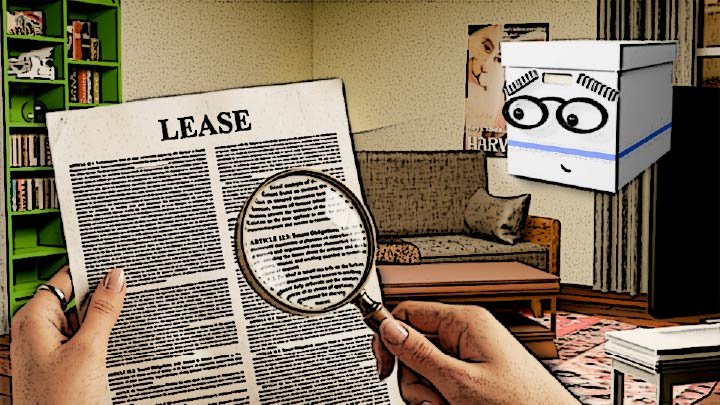
Marty found his first apartment, got handed a stack of paper roughly the thickness of a paperback novel, and did what he does with every app’s terms of service: scrolled to the bottom, found the signature line, and signed.
A lease is not a terms of service. A lease is a legally binding agreement about the roof over your head, and treating it like a cookie-consent popup is how people end up owing money for reasons they never saw coming.
Here’s the good news: underneath all that formatting, a lease is really only answering five or six questions. Once you know what they are, the wall of text stops being scary and starts being skimmable.
📄 What a Lease Actually Is
A lease is a contract between you (the tenant) and whoever owns the property (the landlord), spelling out exactly what each of you is promising the other.
You’re promising to pay a certain amount, on a certain schedule, and to follow certain rules while you live there.
They’re promising to let you live there, undisturbed, for a set period of time, in exchange.
Everything else in the document is just detail attached to that basic trade.
💵 Question One: How Much, and When
Somewhere near the top, find the actual rent amount and the exact day it’s due each month.
Also look for the word “grace period” — some leases give you a few extra days past the due date before a late fee kicks in, and some don’t give you any.
Find the late fee itself too, usually a flat dollar amount or a percentage of rent. This is the single most important paragraph in the whole document, and it’s usually one of the shortest.
🗓️ Question Two: How Long
The “term” is simply how long the lease lasts — most commonly 12 months, though 6-month and month-to-month versions exist too (more on that difference in another post).
Note the exact start and end date. What happens at the end can be one of three things:
- It could just end
- It could roll into a month-to-month arrangement
- It could auto-renew for another full year unless you say something first.
That last option has genuinely surprised people who assumed “it’ll just end” was the default.
🔒 Question Three: What You’re Putting Down Up Front
Look for the security deposit amount, and whether it’s called anything else on the page — “damage deposit” and “security deposit” usually mean the same thing, but always confirm.
This deposit is a whole topic on its own (worth its own post, coming right up), but at minimum, know the number and where it says you get it back.
🔧 Question Four: Who Fixes What
A section usually titled something like “Maintenance” or “Repairs” spells out who’s responsible for what breaks.
Generally, landlords handle structural and major-system issues (plumbing, heating, the roof), and tenants handle smaller stuff and anything they personally caused.
Worth knowing this before something breaks, not while you’re standing in a puddle deciding who to call.
🐾 Question Five: The Rules You Didn’t Know You Agreed To
These items are usually scattered through several shorter clauses rather than one tidy section, but are worth knowing before you sign anything:
- Pet policies
- Guest policies
- Whether you can paint a wall
- Whether smoking is allowed anywhere on the property
- Whether you can have a subletter
Worth a slow read specifically for anything that would genuinely affect how you actually plan to live there.
🚪 Question Six: What Happens If You Need Out Early
Life happens — a job offer in another city, a relationship that falls apart, a roommate situation that goes sideways.
Find the clause about early termination before you need it, not after.
It’ll tell you what breaking the lease actually costs, which is usually a specific dollar penalty or a certain number of months’ rent, not an open-ended mystery.
🛠️ Gear Worth Having
Post-it Flags Multi-Pack — mark up your copy as you go — one color for anything with a dollar amount attached, one for anything with a date, so nothing important gets buried in the formatting.
As an Amazon affiliate, I earn from qualifying purchases. Thank you for supporting ScrumbleDoc.
🔗 Related Reads
- Security Deposits: What You’re Entitled to Get Back
- Month-to-Month vs. Fixed-Term: What’s the Real Difference
- Breaking a Lease Early: What It Actually Costs You
ScrumbleDoc is part of the WhistleBump Group — find the rest of the family at WhistleBump.com.
55001
©2026 John D Reinhart/ScrumbleDoc.com — All rights reserved