Alexa’s landlord doesn’t accept anything except a paper check for rent, a piece of information that arrived roughly one hour before rent was due, alongside the deeply unwelcome discovery that Alexa had genuinely never written a check in her entire life and had no idea where to even begin.
📝 Why This Skill Refuses to Fully Die
Plenty of landlords, small businesses, and even some larger institutions still only accept checks, often for reasons ranging from tradition to genuinely lower processing fees on their end.
Rare enough that most people never learn it properly, common enough that eventually, usually with no warning, you’ll need to.
🖋️ Step 1 – Always Use Ink
Never write a check in pencil — and while you’re at it, skip the erasable pen too. Pencil can be smudged away or altered without a trace, and “erasable” ink is really just ink with a rubber-friendly formula, which means it can be lifted right off the paper the same way. Neither one leaves proof that what you originally wrote is what you actually meant to write.
Ink — regular, boring, permanent ballpoint ink — bonds to the paper instead of sitting on top of it. If someone tries to alter the amount or the payee after the fact, it leaves a visible mark instead of a clean edit. It’s not about penmanship. It’s about making sure the check that gets cashed says the same thing it said when it left your hand.
Blue or black is standard; either works fine, so use whichever’s already in the drawer.
🔢 The Date Line
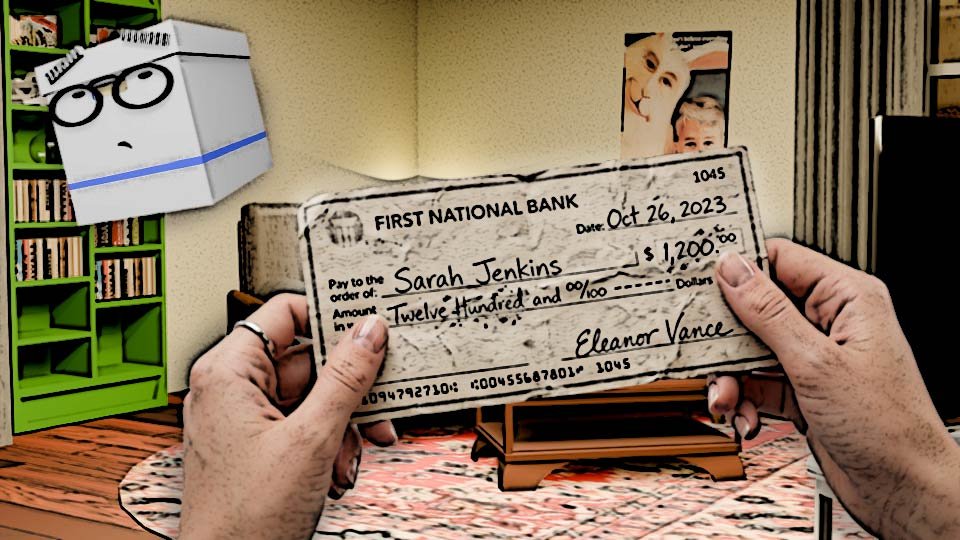
Top right corner. Just today’s date, written normally.
Nothing tricky here — this is the easy part, and a fine place to build a little confidence before the rest.
👤 “Pay to the Order Of”
This is simply asking who the check is for — the exact name of the person or company getting paid.
Write it exactly as they’d want to deposit it; if your landlord’s company is called “Briarwood Properties LLC,” that’s what goes here, not just “landlord” or a nickname.
🔢 The Dollar Box
A small box, usually on the right, where you write the amount in numbers — $1,200.00, for example.
Write it close to the dollar sign with no extra space, since that empty space is exactly where a check could be altered by someone with bad intentions.
✍️ The Dollar Line (Yes, You Have to Write It Out in Words Too)
Directly below the “Pay to the Order Of” line, write the same amount out in words: “One thousand two hundred and 00/100.”
This exists specifically as a test for fraud — if the numbers and the words ever disagree, banks are trained to trust the words, so writing this clearly actually matters.
Draw a line through any remaining blank space on this line too, same anti-tampering logic as the dollar box.
📋 The Memo Line
Optional, bottom left, just a short note for your own records — “August rent” or similar. The bank doesn’t care what’s here; it’s entirely for you and whoever’s reading their own bank statement later.
✒️ Your Signature
Bottom right. This is the line that actually authorizes the payment — an unsigned check is just an elaborate, useless piece of paper.
📒 Recording It Somewhere, So Future You Isn’t Confused
Before handing the check over, jot down the amount, the date, and who it went to — either in a physical check register or just a notes app.
Checks can take days to actually process, and without a record, it’s easy to forget you already spent that money and accidentally count it twice in your head.
🛠️ Gear Worth Having
CASMONAL A5 Checkbook Register — the actual physical record of every check you write, so you’re never guessing what’s already spoken for.
uni-ball 207 Signo Fraud Prevention Gel Pens — ink specifically formulated to resist check washing — the exact kind of thing that makes a real difference on a document meant to move real money.
As an Amazon affiliate, I earn from qualifying purchases. Thank you for supporting ScrumbleDoc.
🔗 Related Reads
- How to Actually Read a Bank Statement
- What a Routing Number and Account Number Actually Do
- How to Spot a Fraudulent Charge (and What to Do About It)
ScrumbleDoc is part of the WhistleBump Group — find the rest of the family at WhistleBump.com.
50004
©2026 John D Reinhart/ScrumbleDoc.com — All rights reserved