
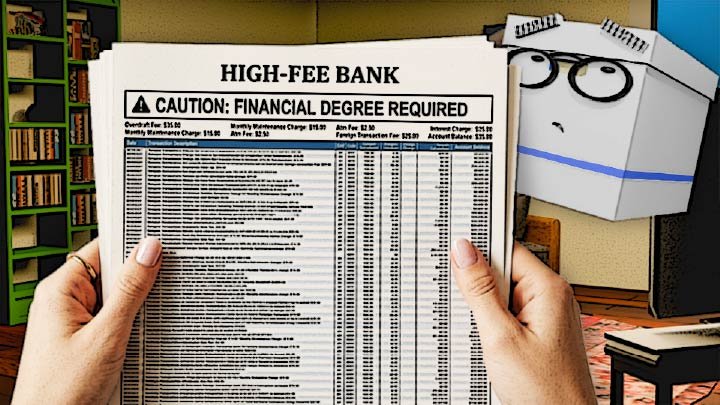
Marty’s bank statement lands in his inbox every month like clockwork, and every month he opens it, stares at a grid of numbers that looks like it’s personally daring him to understand it, and closes it again with the quiet confidence of a man who is definitely fine, probably, statistically.
He has never once actually read one. He has simply trusted that the number at the top is roughly correct and gotten on with his life — which, statement after statement, has technically worked out for him. That’s not a strategy. That’s a streak.
📊 It’s Not One Big Mystery, It’s Five Small Things
A bank statement looks intimidating because it’s dense, not because it’s actually complicated.
Every single line on it is doing one of five jobs: showing money that came in, money that went out, a fee, a running balance, or a date. That’s it. That’s the entire alphabet this document is written in.
Once you’re hunting for those five things specifically instead of trying to absorb the whole page in one horrified glance, it stops being a wall of numbers and starts being a list — a boring one, sure, but a list.
💰 Beginning Balance and Ending Balance
These are exactly what they sound like — how much was in the account on day one of the statement period, and how much was there on the last day.
Everything else on the page is basically the show-your-work section explaining how you got from one number to the other.
⬆️ Deposits and Credits (Money Coming In)
Anything that added money to the account — a paycheck, a transfer from savings, a refund — shows up here, usually with a date and a short description.
“Credit” just means money got added; it’s not the same thing as a credit card, even though your brain will absolutely try to connect those two words like they’re old friends.
⬇️ Withdrawals and Debits (Money Going Out)
The mirror image — anything that took money out. Debit card purchases, ATM withdrawals, automatic bill payments, checks that cleared.
“Debit” here just means money leaving, same logic as above, no relation to your card except sharing a name.
🧾 Fees: The Line Worth Actually Reading Every Time
This is the one section that deserves your actual attention, because it’s the part of the statement that’s easiest to skim past and most likely to quietly cost you money if you do.
Monthly maintenance fees, overdraft fees, ATM fees from using the wrong machine — they’re usually small on their own and easy to shrug off, which is exactly why they’re worth a real check every single month instead of an assumption that they’re not there.
📅 Why the Dates Matter More Than They Look Like They Should
Transactions are listed by the date they actually posted to your account, which isn’t always the same day you made the purchase.
A coffee bought on a Friday might not show up until Monday, having taken the weekend off same as you did.
That little lag is exactly why your own mental math of your balance can drift from what the bank shows, and it’s worth knowing the gap exists rather than assuming the statement made a mistake.
🔍 What to Actually Scan For Each Month
A quick monthly pass — five minutes, tops — checking for: any fee you don’t recognize, any transaction you don’t remember making, and whether the ending balance roughly matches what you expected.
That’s the whole habit. Not reading every line like it’s a novel, just noticing the two or three things that would genuinely matter if they turned out to be wrong.
It’s actually quite simple. But we can’t equate easy with skippable. They are not the same.
Do yourself, and your future self, a favor and take the five minutes to read the statement every month. Now that you know how to read it, you’ll be the captain of your financial ship.
🔗 Related Reads
- Checking vs. Savings: What Each Account Is Actually For
- Minimum Balances and Fees: The Fine Print Nobody Reads
- How to Spot a Fraudulent Charge (and What to Do About It)
ScrumbleDoc is part of the WhistleBump Group — find the rest of the family at WhistleBump.com.
50001
©2026 John D Reinhart/ScrumbleDoc.com — All rights reserved
One thought on “How to Actually Read a Bank Statement”