

The Last Sleepover for Lewis: What Makes a Good Houseguest

Being a good houseguest isn’t complicated. It’s just a long list of small things nobody tells you until you’ve already gotten every one of them wrong.

Lewis has stayed over four times now. This was going to be the last one, though he didn’t know that yet, sitting on the edge of the coffee table while Alexa delivered the news in the calm, measured tone of someone who had rehearsed this speech in the shower that morning.

Lewis is a genuinely nice guy. He is also the kind of houseguest who leaves the bed looking like a crime scene, has never once offered to buy groceries, and treats “what time works for breakfast” as a rhetorical question rather than one requiring an actual answer.

None of this made him a bad person. It made him, four visits running, a bad guest — which turns out to be its own separate skill nobody teaches directly.

🛏️ The Basics: Treat the Space With Real Respect

Keep your area reasonably tidy — not showroom-perfect, just not actively hazardous. Ask before using anything that wasn’t obviously offered to you: specific towels, the good coffee, whatever’s clearly someone’s personal shampoo and not the guest bottle.

Be mindful of noise, especially early morning and late night, when the rest of the house is asleep and you are, apparently, watching videos at full volume on your phone with the ringer still on.

None of this is complicated. It’s just “this isn’t your space” translated into the specific, boring, practical decisions that come up every single hour of an actual stay.

🍽️ Contribute Without Waiting to Be Asked

Offer to help with a meal. Pick up groceries once during the stay, unprompted.

Handle a chore — empty the dishwasher, take out the trash — without being asked to.

A host almost never asks directly for any of this, because asking a guest to help feels rude to most hosts, even when they’d genuinely appreciate it.

That means the entire signal has to come from you offering first.

Lewis, notably, never offered. Lewis assumed hospitality was a bottomless resource that simply regenerated on its own, like a video game health bar.

📅 Have a Real Sense of Your Own Schedule

Know roughly what you’re doing each day of the visit, rather than treating your host like a full-time cruise director whose entire job is entertaining you.

Your host has an actual life continuing to happen around your visit — work, errands, other obligations — and “what are we doing today?” asked fresh every single morning, with zero ideas of your own attached, gets exhausting to answer by day three.

🛏️ The Bed: Strip It or Make It, Don’t Just Leave It

On departure, strip the bedding if that’s the house norm, or at minimum make the bed neatly if it isn’t.

This is a small gesture that costs you ninety seconds and genuinely changes how the whole visit gets remembered.

A rumpled, abandoned bed is the specific image burned into Alexa’s mind from visit number three, and it is, as of this conversation, the reason visit number five isn’t happening.

🎁 The Host Gift: A Real, Worthwhile Gesture

Bring something for your host — beyond a single dinner contribution, especially for a multi-night stay.

A bottle of something, a small specialty from wherever you’re traveling from, or simply treating them to a nice meal out during the visit all genuinely round things out. It doesn’t need to be expensive.

It needs to exist, which puts it several steps ahead of whatever Lewis brought, which was nothing, four separate times, with a level of consistency that was almost impressive.

✍️ The Thank-You Afterward

Send a genuine thank-you message after you’ve left — not the rushed “thanks for having me!” shouted over your shoulder on the way out the door, but something sent later, that actually names the specific effort they put in.

For a longer or more significant stay, this is exactly the situation from the thank-you note post where an actual written note, not just a text, earns its extra effort.

Lewis sent a text. It said “lol thx.” He is currently, as far as he knows, still welcome for a fifth visit.

🔗 Related Reads

ScrumbleDoc is part of the WhistleBump Group — find the rest of the family at WhistleBump.com.

54009

©2026 John D Reinhart/ScrumbleDoc.com — All rights reserved
Tipping: Who, How Much, and When

Tipping culture has quietly expanded to include a tablet turned toward you at the coffee counter. Here’s an actual framework for navigating all of it.

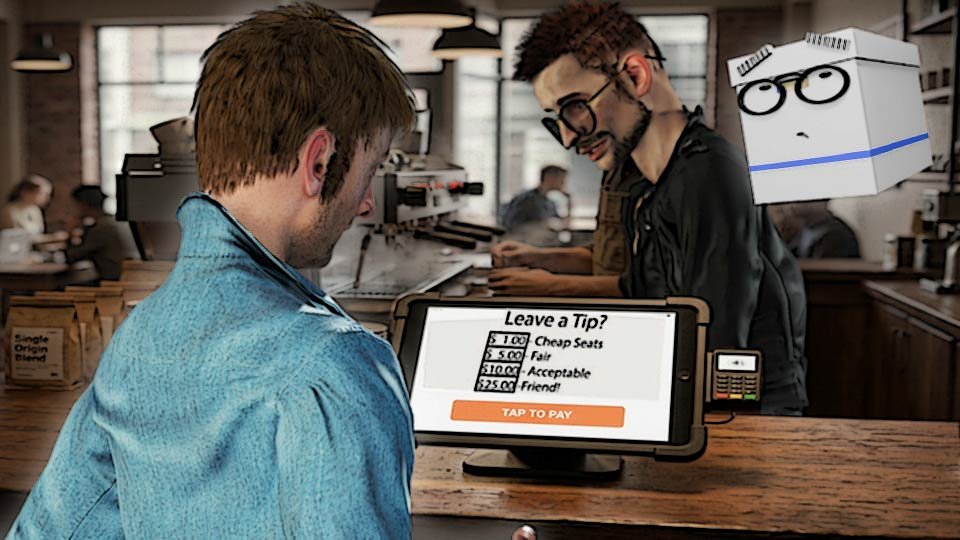
Marty ordered a single coffee. One coffee. A beverage that involved a machine and roughly eleven seconds of another human’s time. The card reader spun around to reveal three preset tip options, the lowest of which was still a genuinely startling percentage of four dollars.

He stood there, frozen, doing quiet, anxious math in front of a growing line of people, all of whom were presumably judging him for taking so long to decide the fate of sixty cents.

🍽️ Restaurants: The Most Established Baseline

Sit-down restaurant service is the one category almost everyone already agrees on: roughly 15-20% of the pre-tax bill for typical service, higher for something genuinely excellent.

It’s honestly fine to tip less for service that was genuinely bad — not “they forgot the extra napkins” bad, but “you had to physically go find your own server” bad.

Most people default toward the higher end of that range without thinking too hard about it, which is a perfectly reasonable way to not have to digest numbers while digesting dinner.

🚗 Delivery and Rideshare: A Real, Expected Category

Food delivery and rideshare drivers genuinely rely on tips as real income, not a bonus, the same way a restaurant server does.

A common range is 15-20%, or a flat few dollars for a short trip.

It’s worth treating this category with the same seriousness as sit-down dining, not as some kind of optional extra.

The driver isn’t tangential to the transaction. He is, structurally, most of it.

💇 Personal Services: Hairdressers, Barbers, and Similar

Generally 15-20%, same as a restaurant.

One wrinkle worth knowing: some salon owners who own their own chair don’t expect a tip the same way an employee stylist does, since they’re not splitting the proceeds with a business owner above them.

This is a genuinely normal thing to just ask about directly — “do you take tips?” is not an awkward question, it’s a completely standard one, asked constantly, by people who did not want to do the math either.

📱 The Tablet-Turned-Toward-You Situation: You Genuinely Have Options

Counter service — coffee shops, quick takeout, the eleven-second transactions of the world — is where tipping culture has expanded fastest and least consistently, and it’s worth understanding why that screen makes you feel the way it does before deciding what to do about it.

Those preset percentages aren’t neutral. They’re deliberately set high, because a screen that starts at 25% makes 15% feel like the stingy option, even on a four-dollar coffee that took eleven seconds to make. That’s not etiquette. That’s a psychology experiment wearing a payment terminal’s clothes.

So, the actual solution: decide your own policy in advance, before you’re standing there with a line behind you and a cashier definitely not watching your screen nearly as closely as you assume they are.

A reasonable, defensible line is to tip when something was genuinely made for you — a latte someone actually steamed and poured, a sandwich someone built — and to skip it, guilt-free, for something that was just handed to you, like a bottled drink or a bag of chips rung up at a register.

Hit “custom amount,” type in zero, and move on with your day. The moment of awkwardness lasts about two seconds and is forgotten by literally everyone else in that line before they’ve even reached the counter.

A tablet prompting you is a business choice, not a social contract. You’re allowed to treat it as optional, because it is.

🏨 Hotels: An Easy Category to Forget Entirely

Housekeeping is worth a few dollars a day, left directly in the room — in cash, and clearly marked (a small envelope, a note that says “thank you”) so it doesn’t get mistaken for money someone accidentally left behind and skipped entirely.

This is genuinely easy to forget, since unlike a server, housekeeping staff are rarely standing there for you to hand something to directly. Nobody’s going to chase you down about it.

That’s exactly why it’s worth building the habit of leaving it before you check out, not after you’re already in the elevator wondering if you should have.

🎯 The General Principle Underneath All of This

Tipping norms genuinely vary by service type, by region, and sometimes by the individual business you happen to be standing in.

When you’re truly unsure, a quick, discreet search for “tipping norms for [specific situation]” settles most uncertainty faster than the anxious math Marty was doing in that coffee line.

And here’s the part worth actually believing: nobody has ever once been offended by a guest who clearly put a little thought into it — whichever way that thought landed.

🔗 Related Reads


ScrumbleDoc is part of the WhistleBump Group — find the rest of the family at WhistleBump.com.

54007

©2026 John D Reinhart/ScrumbleDoc.com — All rights reserved
RSVP: What It Actually Means and Why Ignoring It Is Rude

RSVP shows up on nearly every invitation and almost nobody knows what the letters actually stand for, let alone why ignoring it is such a problem.

Alexa has seen the letters “RSVP” on essentially every invitation she’s ever received in her entire life. She’s always understood it as a vague, generalized suggestion to “let them know maybe.” She has genuinely never once known it was actually a specific French phrase making a fairly direct request — one she has, by her own count, ignored roughly a dozen times without a flicker of guilt. That’s about to change.

🇫🇷 What the Letters Actually Stand For

RSVP is an abbreviation of the French phrase “répondez s’il vous plaît” — literally, “please respond.” It’s not a vague nudge or an optional nicety. It’s a direct, explicit request for a definite yes or no answer, dressed up in a language most English speakers only half-recognize and have collectively agreed to never actually translate in their heads.

If the four letters said “PLEASE RESPOND” in plain English instead, a lot fewer people would feel comfortable ignoring them.

Same request. Fancier packaging.

😬 Why Not Responding Is Genuinely Inconsiderate, Not Just Distracted

A host planning an event is making real decisions based on how many people actually show up. How much food to prepare. How many chairs to set out. Sometimes a per-person cost they’re personally covering out of their own pocket, especially for something like a catered wedding or a restaurant reservation with a set menu.

Not responding doesn’t just leave a host wondering in some abstract sense — it can genuinely cost them real money, and create real logistical stress, even though it rarely feels that consequential from the guest’s side of the equation.

You forgetting to reply for two weeks is, to you, a minor oversight. To the host, it’s an unfilled seat they can’t plan around.

📅 The Deadline Actually Matters, Not Just the Response

An RSVP date isn’t arbitrary, and it isn’t the host being fussy.

It’s usually tied directly to when they need to finalize a headcount with a caterer, a venue, or a rental company — real deadlines imposed on the host by other businesses, which then get passed down to you as your deadline.

Responding after that date puts a host in an uncomfortable spot: either scramble to accommodate a late addition with a vendor who’s already locked in a number, or have to say no to you.

Neither option is fun for them, and both were avoidable.

✅ What a Complete RSVP Actually Includes

A clear yes or no.

Not “maybe,” not “probably,” not silence that the host is left to interpret.

Respond by the requested date, through whatever method was actually requested — a reply card mailed back, a phone call, a specific RSVP website or app link included in the invitation.

If the host asks you to respond a particular way, that’s not a suggestion either; showing up to the event and verbally confirming in person doesn’t count if they needed the headcount two weeks earlier.

If the invitation asks for a specific headcount — especially in a plus-one situation — include that clearly and by name if you can, rather than leaving the host to guess or chase you down for a follow-up text.

“Yes, I’ll be there” is only half an answer if they also need to know whether you’re bringing someone.

🔁 What to Do If Your Answer Changes Later

If you RSVP yes and then genuinely can’t attend — or the reverse, you said no and something opens up — letting the host know as soon as you know is the actual courteous move, not waiting until the event itself to sort it out.

Plans changing isn’t rude on its own. Everyone’s life shifts sometimes. Leaving a host to find out at the door, or to notice an empty seat they paid for, is the part that’s actually inconsiderate.

❓ A Few Terms Worth Knowing While You’re At It

“Regrets only” means the opposite of a standard RSVP: you only need to respond if you’re NOT coming. Silence is treated as a yes. It’s used for lower-stakes gatherings where the host expects most people to attend and doesn’t want to chase down a hundred separate confirmations. “

RSVP by [date]” is exactly what it says — a hard deadline, not a suggestion of when responses start being welcome.

And a formal invitation that lists specific names on the envelope, without “and guest” anywhere on it, means exactly those people are invited, nobody else — asking to bring someone not listed puts the host in the position of having to say no to your face, which is worth sparing them if you can.

🔗 Related Reads


ScrumbleDoc is part of the WhistleBump Group — find the rest of the family at WhistleBump.com.

54004

©2026 John D Reinhart/ScrumbleDoc.com — All rights reserved

What to Bring When You’re a Dinner Guest

Showing up empty-handed to a dinner feels fine until everyone else is holding something and you’re not. Here’s what’s actually expected.

Marty showed up to a dinner party at a friend’s new apartment with nothing but his usual charming self and a healthy appetite. He clocked it the moment he walked in: every other guest was holding a bottle of wine, a dessert, or something small and wrapped. A silent dress code, apparently, and he’d missed the memo entirely. He has since read this post. You don’t want to learn it his way.

🍷 The Default, Safe Answer: A Bottle of Wine

Wine remains the most common, safest go-to for a dinner party, largely because it works whether or not it actually gets opened that night. A host isn’t obligated to serve whatever you bring — it’s genuinely not rude for them to set it aside for another occasion instead. Bringing wine isn’t really about supplying tonight’s drink. It’s about arriving with something in hand.

If you don’t know wine, you don’t need to become an expert to get this right. A mid-range bottle, somewhere in the $15–$20 range, from an actual wine shop rather than a gas station, covers you fine.

If you genuinely have no idea what to grab, telling the person behind the counter “something for a dinner party, nothing too fancy” gets you a solid answer in about ten seconds. Red is the safer default if you know nothing else about the meal — it pairs more forgivingly across a wider range of dishes than white does, though if you happen to know the meal is fish or something light, white is the better call.

When genuinely unsure, red wins the coin flip.

🚫 What Actually Cancels the “Bring Something” Rule

If the host explicitly says “please don’t bring anything, I’ve got it all covered,” that’s usually a genuine, sincere request, not just politeness. Showing up with something anyway isn’t wrong, but it’s also not expected the way it is by default.

Listening to what a host actually says matters more than defaulting to a rigid rule regardless of what they told you.

🍽️ When It’s a Potluck Instead of a Dinner Party

A genuine potluck is a different animal entirely. Bringing a specific dish is the whole point, not an optional courtesy on top of it.

If unsure which category an invitation falls into, it’s a completely normal, non-awkward question to just directly ask the host.

If it is a potluck, a few things make you a genuinely easy guest to have. Ask if there’s a category already covered — nobody needs five potato salads and zero desserts, and a quick “what’s still needed?” solves that instantly.

Bring something that travels well and doesn’t need the host’s oven or stovetop at the last minute; a dish that needs to be reheated, plated, or finished in someone else’s kitchen adds a chore to their night, not a gift.

And bring something you’ve actually made before, ideally more than once — a potluck is a genuinely bad place to debut a recipe for the first time and discover it doesn’t travel, doesn’t reheat, or just didn’t turn out.

🌸 Non-Consumable Options, If You’d Rather Not Bring a Drink

Flowers, a small plant, or a nice candle all work as alternatives to wine, especially for a host who doesn’t drink or where a food-related gift feels like it might compete with the meal itself.

None of these require nearly the thought people put into agonizing over the “perfect” bottle. A pre-arranged bouquet from any grocery store, handed over at the door, does the job completely.

🍰 If You’re Bringing Food, Ask First

Unless it’s explicitly a potluck, checking with the host before bringing a dish avoids two problems at once: accidentally duplicating something they’ve already planned, and bringing something that clashes with a meal they’ve carefully put together.

It’s also worth asking about any dietary restrictions among the other guests before you show up with something everyone but one person can actually eat. A quick “want me to bring anything specific?” solves all of this cleanly, in one text, before you’ve bought anything at all.

🔗 Related Reads


ScrumbleDoc is part of the WhistleBump Group — find the rest of the family at WhistleBump.com.

54003

©2026 John D Reinhart/ScrumbleDoc.com — All rights reserved
How to Actually Address an Envelope (Return Address, Recipient, Stamp)

An envelope has a very specific place for everything, and almost nobody ever taught you where. Here’s the actual layout.

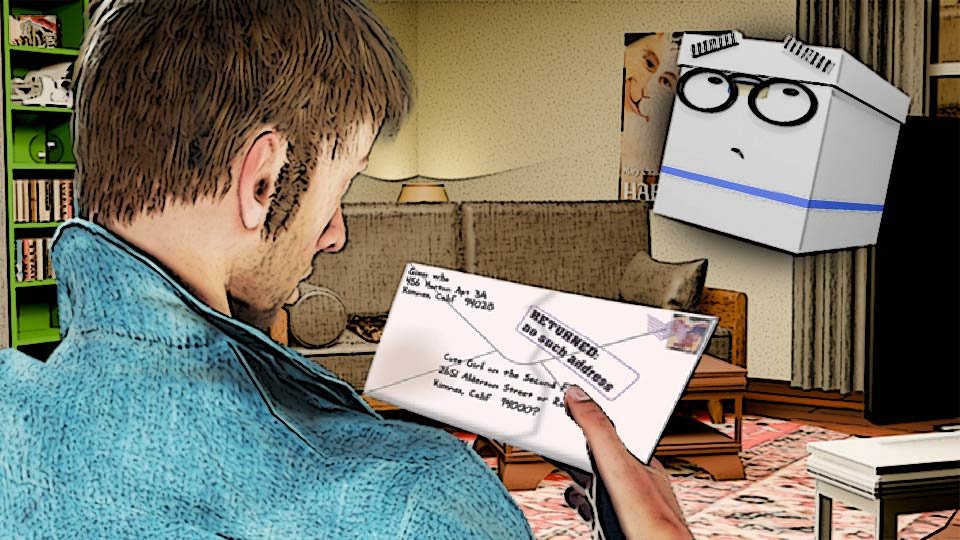
Marty needed to mail an actual physical letter for the first time in what felt like a decade, held a blank envelope in his hands, and realized with genuine alarm that he had no idea which corner anything went in — a task he was fairly sure he’d learned once, in childhood, and had since let quietly evaporate.

📬 The Recipient’s Address: Front and Center

The person you’re sending the letter to goes in the middle of the envelope, roughly centered, written across three lines: their name on the first line, street address on the second, and city, state, and ZIP code on the third.

This is the biggest, most prominent text on the whole envelope, and for good reason — it’s the only part the postal system actually needs to deliver it.

Make sure the bottom line of address (city, state, and zip) are at least an inch above the bottom of the envelope. This is the space the post office uses to apply a delivery barcode.

↖️ Your Return Address: Top Left Corner

Your own address goes small, in the top left corner — same three-line format as the recipient’s address, just your own information instead.

This isn’t required for delivery, but it’s essential if the letter can’t be delivered for some reason, since it’s how the post office gets it back to you instead of it vanishing forever.

You can handwrite your address, use one of the stickers that will invariably get sent to you by someone seeking donations, or use a rubber stamp. It doesn’t matter, as long as it stays in the upper left corner of the envelope.

🎫 The Stamp: Top Right Corner, Always

The stamp goes in the top right corner, full stop — this one’s non-negotiable, unlike some of the softer conventions elsewhere in this post.

A letter without postage simply doesn’t go anywhere, and a stamp in the wrong spot can genuinely confuse automated sorting equipment.

💰 How Many Stamps You Actually Need

A standard letter, standard size, one ounce or under, needs exactly one Forever stamp (a stamp that never expires or loses value, regardless of future postage price increases).

Anything heavier, oddly shaped, or oversized may need additional postage — worth a quick weigh or a trip to the post office counter if a letter feels notably heavier than a couple of sheets of paper.

A rule of thumb: if it makes you wonder if one stamp is enough, add another stamp.

✍️ A Few Formatting Details Worth Getting Right

Write clearly, ideally in dark ink.

The U.S. Postal Service actually prefers all capital letters with no punctuation for the address lines (their sorting machines read this format most reliably), though standard formatting works fine too — this is a nice-to-know, not a strict requirement for a personal letter.

Calligraphy is nice, but don’t use it to address the envelope – it can confuse the postal service’s scanning equipment.

📬 Why the Details Actually Matter

Here’s the part nobody explains: none of that address gets read by an actual human being who cares about penmanship. It gets read by a scanner. A fast one. The postal service runs enormous machines that photograph your envelope and pull the address apart, line by line, looking in very specific spots for very specific information.

The recipient’s name goes on one line. The street address goes on the next. City, state, and ZIP go on the line after that. The scanner isn’t reading your envelope like a paragraph — it’s reading it like a form, and it expects each piece of information to show up exactly where a form would put it.

Get the order right, and your letter gets sorted automatically in about the time it takes you to read this sentence. Get it wrong — swap two lines, scribble the ZIP code somewhere creative — and the machine can’t make sense of it.

That’s when a letter gets kicked out for a human to sort by hand, which is slower, or misrouted entirely, which is worse. Or, if you supplied a return address, it comes back to you.

All of which is to say: this isn’t etiquette for etiquette’s sake. It’s just, unglamorously, how to talk to a machine that’s about to decide where your letter ends up.

🛠️ Gear Worth Having

ExcelMark Personalized Return Address Stamp — stamp your return address in two seconds instead of hand-writing it every single time — genuinely worth it the moment you’re sending more than one or two letters a year.

As an Amazon affiliate, I earn from qualifying purchases. Thank you for supporting ScrumbleDoc.

🔗 Related Reads


ScrumbleDoc is part of the WhistleBump Group — find the rest of the family at WhistleBump.com.

54010

©2026 John D Reinhart/ScrumbleDoc.com — All rights reserved