
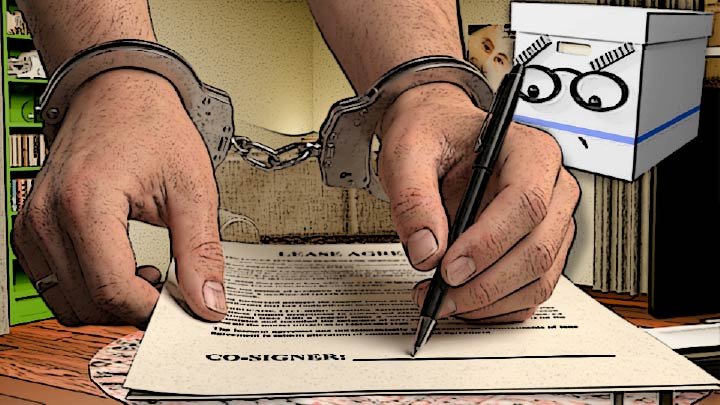
Marty’s younger cousin, fresh out of the dorms with zero rental history and zero credit history to speak of, asked Marty to co-sign her first apartment lease.
Marty said yes on the spot, because that’s what family does, and only afterward actually stopped to wonder what “co-signing” technically meant he’d just agreed to.
Turns out: quite a lot.
✍️ What Co-Signing Actually Is
A co-signer (sometimes called a guarantor) is someone who isn’t living in the apartment but signs the lease anyway, personally promising to cover the rent — and often damages — if the actual tenant doesn’t.
Landlords ask for one when a tenant doesn’t yet have the credit history, income, or rental track record to qualify entirely on their own — which describes almost every first-time renter.
💳 Your Credit Is Genuinely On the Line, Not Just Theirs
This is the part that surprises people most: a co-signer’s credit is directly affected by how the lease actually goes, just like the tenant’s is.
Missed or late payments can show up on the co-signer’s credit report, not only the tenant’s, and the co-signer is just as legally pursuable for unpaid rent as the person actually living there.
♾️ It Doesn’t Automatically End When You Think It Does
A common and genuinely costly misunderstanding: co-signing isn’t necessarily a one-time, one-lease-term commitment.
If the lease auto-renews and the co-signer agreement was written without defining what happens to the co-signer’s obligation at the end, it can quietly continue right along with it.
That’s a detail worth confirming explicitly: does the co-signing commitment ends with the original lease term does, or does it renew right alongside it without anyone actively re-signing anything?
🔍 What to Actually Read Before Signing Anything
A co-signer should read the full lease just as carefully as the tenant does — not just a summary, not just the part where you sign.
Look specifically for exactly what you’re liable for (rent only, or damages too), whether there’s any cap on that liability, and precisely when the obligation ends.
🗣️ The Conversation Worth Having First
Co-signing works best with total honesty upfront: what happens if a payment gets missed, who finds out first, what the actual plan is if things go sideways.
It’s a real financial commitment wearing the costume of a favor, and treating it with that level of seriousness — even for family, especially for family — protects the relationship as much as it protects your credit.
🔗 Related Reads
- What “Joint and Several Liability” Means for a Roommate Situation
- How to Actually Read a Lease Before You Sign It
- Breaking a Lease Early: What It Actually Costs You
ScrumbleDoc is part of the WhistleBump Group — find the rest of the family at WhistleBump.com.
50001
©2026 John D Reinhart/ScrumbleDoc.com — All rights reserved