
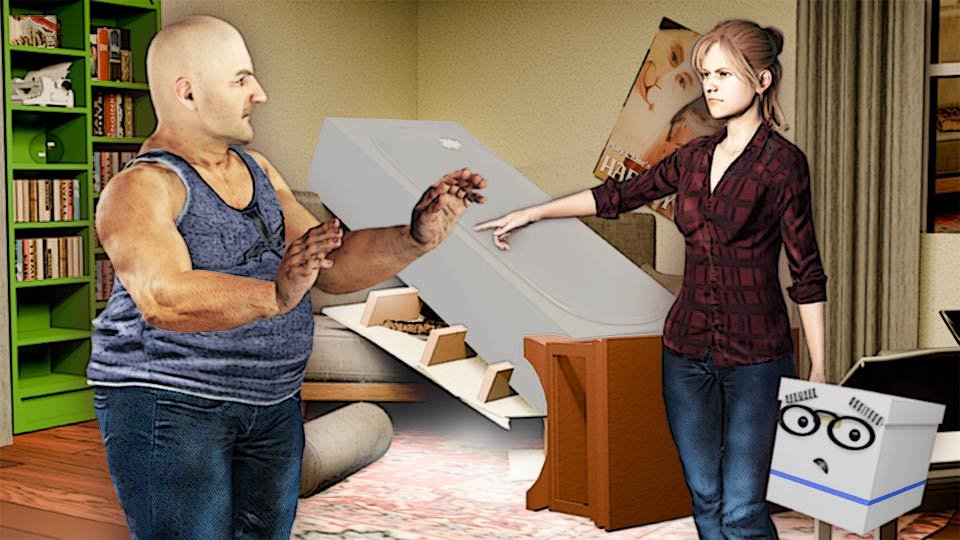
Alexa assumed, with total and unearned confidence, that if her apartment ever burned down, flooded, or got broken into, her landlord’s insurance would simply handle it — a building, insurance, seemed like a package deal to her.
It is not.
And the actual answer is a little more uncomfortable: her landlord’s policy covers the building. It has never heard of Alexa’s laptop, and it doesn’t give a fiddler’s fart about it.
🏢 What Your Landlord’s Insurance Actually Covers
Landlord insurance protects the physical structure — walls, roof, plumbing, the building itself — and generally the landlord’s own liability if someone gets hurt due to a structural problem.
It has zero interest in, and zero coverage for, anything you personally own inside that structure.
💻 What Renters Insurance Actually Covers
Renters insurance covers your personal belongings — furniture, electronics, clothes, that suspiciously large collection of kitchen gadgets — against things like fire, theft, and certain kinds of water damage, up to whatever coverage limit your specific policy sets.
It also typically includes liability coverage, meaning if someone gets injured in your apartment and it’s genuinely your fault, it can help cover that too.
💸 Why It’s Genuinely Cheap for What It Does
Renters insurance is routinely one of the least expensive types of insurance available — often somewhere in the range of $15 to $30 a month, depending on location and coverage amount — specifically because you’re only insuring your belongings, not an entire building.
For a lot of people, replacing everything they own out of pocket after a fire or theft would cost vastly more than years of premiums combined.
📋 The Part Almost Nobody Actually Does: A Home Inventory
If you ever do need to file a claim, you’ll need to prove what you actually owned and roughly what it was worth — which is a genuinely difficult thing to reconstruct from memory during a stressful moment.
A home inventory is just a simple record — photos or a written list of your belongings, ideally with rough values — made before anything ever happens, specifically so you’re not trying to remember every item you owned while standing in a pile of water-damaged furniture.
🏠 What It Doesn’t Cover, Even Though People Assume It Does
Most standard renters insurance policies exclude flood damage and earthquake damage by default — both usually require a separate, specific policy add-on.
It’s worth checking your specific policy’s exclusions section directly rather than assuming “water damage” covers absolutely everything involving water.
🛠️ Gear Worth Having
Fireproof Document Box with Key Lock — keep your renters policy, your home inventory list, and any receipts for big-ticket items somewhere that survives the exact disaster you’re insured against.
Sooez 13-Pocket Accordion File Organizer — a simple home for receipts and photos as you build your inventory, before it all goes into the fireproof box for safekeeping.
As an Amazon affiliate, I earn from qualifying purchases. Thank you for supporting ScrumbleDoc.
🔗 Related Reads
- How a Claim Actually Works, Start to Finish
- What a Deductible Actually Means
- Reading Your Policy’s Declarations Page
ScrumbleDoc is part of the WhistleBump Group — find the rest of the family at WhistleBump.com.
51009
©2026 John D Reinhart/ScrumbleDoc.com — All rights reserved