

Renters Insurance: What It Covers and What It Doesn’t

Your landlord’s insurance covers the building. It does not cover your stuff. Here’s the policy most renters skip and shouldn’t.

Alexa assumed, with total and unearned confidence, that if her apartment ever burned down, flooded, or got broken into, her landlord’s insurance would simply handle it — a building, insurance, seemed like a package deal to her.

It is not.

And the actual answer is a little more uncomfortable: her landlord’s policy covers the building. It has never heard of Alexa’s laptop, and it doesn’t give a fiddler’s fart about it.

🏢 What Your Landlord’s Insurance Actually Covers

Landlord insurance protects the physical structure — walls, roof, plumbing, the building itself — and generally the landlord’s own liability if someone gets hurt due to a structural problem.

It has zero interest in, and zero coverage for, anything you personally own inside that structure.

💻 What Renters Insurance Actually Covers

Renters insurance covers your personal belongings — furniture, electronics, clothes, that suspiciously large collection of kitchen gadgets — against things like fire, theft, and certain kinds of water damage, up to whatever coverage limit your specific policy sets.

It also typically includes liability coverage, meaning if someone gets injured in your apartment and it’s genuinely your fault, it can help cover that too.

💸 Why It’s Genuinely Cheap for What It Does

Renters insurance is routinely one of the least expensive types of insurance available — often somewhere in the range of $15 to $30 a month, depending on location and coverage amount — specifically because you’re only insuring your belongings, not an entire building.

For a lot of people, replacing everything they own out of pocket after a fire or theft would cost vastly more than years of premiums combined.

📋 The Part Almost Nobody Actually Does: A Home Inventory

If you ever do need to file a claim, you’ll need to prove what you actually owned and roughly what it was worth — which is a genuinely difficult thing to reconstruct from memory during a stressful moment.

A home inventory is just a simple record — photos or a written list of your belongings, ideally with rough values — made before anything ever happens, specifically so you’re not trying to remember every item you owned while standing in a pile of water-damaged furniture.

🏠 What It Doesn’t Cover, Even Though People Assume It Does

Most standard renters insurance policies exclude flood damage and earthquake damage by default — both usually require a separate, specific policy add-on.

It’s worth checking your specific policy’s exclusions section directly rather than assuming “water damage” covers absolutely everything involving water.

🛠️ Gear Worth Having

Fireproof Document Box with Key Lock — keep your renters policy, your home inventory list, and any receipts for big-ticket items somewhere that survives the exact disaster you’re insured against.

Sooez 13-Pocket Accordion File Organizer — a simple home for receipts and photos as you build your inventory, before it all goes into the fireproof box for safekeeping.

As an Amazon affiliate, I earn from qualifying purchases. Thank you for supporting ScrumbleDoc.

🔗 Related Reads

  • How a Claim Actually Works, Start to Finish
  • What a Deductible Actually Means
  • Reading Your Policy’s Declarations Page

ScrumbleDoc is part of the WhistleBump Group — find the rest of the family at WhistleBump.com.

51009

©2026 John D Reinhart/ScrumbleDoc.com — All rights reserved

How a Claim Actually Works, Start to Finish

Filing an insurance claim for the first time feels like sending a message into a void. Here’s what’s actually happening on the other end.

Alexa’s ceiling produced a bathtub. Not metaphorically — an actual bathtub, at an angle, with her upstairs neighbor Carl riding it down like a waterslide, shirtless, waving, apparently under the impression that this qualified as dropping by to apologize.

His bathtub had overflowed for reasons he described as “a whole thing,” and now her ceiling had a hole in it roughly bathtub-shaped, her rug was soaked through, and she was on the phone with her insurance company, panicking, while the calm, unbothered voice on the other end used the word “claim” roughly nine times in ninety seconds without ever quite explaining what that actually meant or what happened next.

Carl, meanwhile, was still standing in her living room in swim trunks. Let’s sort out the insurance part first.

📞 Step One: You Report It

A claim starts with you telling your insurance company something happened — by phone, app, or website, depending on the company.

You’ll describe what occurred (a neighbor’s bathtub flooded through your ceiling, for instance, an example chosen entirely at random), roughly when it happened, and roughly what was damaged or lost.

This first call isn’t the whole process. It’s just opening the door to it, the very first domino, not the resolution.

🔢 You Get a Claim Number — Write This Down Immediately

Every claim gets assigned a specific reference number, and every single future conversation about it — every phone call, every follow-up, every time you get transferred to someone new — will start with someone asking you for that number.

Write it down the second you get it, somewhere you won’t lose it. A claim number is the difference between a thirty-second follow-up call and starting the entire soaked-rug, shirtless-neighbor explanation over again from scratch with a total stranger.

🕵️ Step Two: An Adjuster Gets Involved

An insurance adjuster is the person whose actual job is investigating the claim — reviewing whatever documentation you provide, sometimes inspecting the damage in person, sometimes working entirely from photos, and ultimately determining how much the insurance company should actually pay out.

Think of them as the translator standing between “something bad happened to my ceiling” and an actual dollar figure the policy is willing to cover. They didn’t witness Carl’s descent. They only know what you show them.

📸 Why Your Own Documentation Matters So Much Here

Photos of the damage — the hole in the ceiling, the water stain spreading across the rug, the actual bathtub sitting at an angle in the middle of the living room, if it’s still there. Carl doesn’t necessarily figure into these pictures.

Receipts for anything damaged or ruined. A written timeline of what happened and when, while it’s still fresh, not reconstructed from memory two weeks later. All of this genuinely speeds up and strengthens a claim.

An adjuster working from clear photos and a clear timeline moves faster, and more accurately, than one working only from a panicked phone call and a secondhand description of a man in swim trunks.

💰 Step Three: The Settlement

Once the adjuster finishes reviewing everything, the insurance company offers a settlement — the actual amount they’ll pay, with your deductible already subtracted from it.

This isn’t automatically a final, take-it-or-leave-it number handed down from on high. You’re allowed to negotiate or push back if the offer genuinely seems to undervalue what was lost or damaged, the same way you’d question any bill that looked wrong.

⏱️ How Long This Actually Takes

Simple, well-documented claims can resolve in days to a couple of weeks.

More complex ones — significant damage, disputes over what actually caused it, disagreements over value — can take considerably longer.

There’s no single universal timeline that applies to every claim equally, which is exactly why holding onto that claim number for follow-up calls matters as much as it does; a claim that’s taking a while isn’t necessarily a claim that’s gone wrong.

🚫 If a Claim Gets Denied, That’s Not Automatically the End

Claims do get denied — sometimes for legitimate policy reasons, sometimes because of a genuine mistake, missing documentation, or paperwork that got filed incorrectly somewhere along the way.

Most insurers have a formal appeals process built for exactly this. It’s worth actually reading the denial reason carefully rather than assuming it’s final, and pursuing it if the reasoning genuinely seems wrong.

A denial is a checkpoint, not necessarily the last word.

🔗 Related Reads


ScrumbleDoc is part of the WhistleBump Group — find the rest of the family at WhistleBump.com.

51008

©2026 John D Reinhart/ScrumbleDoc.com — All rights reserved
Health Insurance: Deductible vs. Copay vs. Coinsurance, Explained

“I have insurance, why do I owe anything?” Here’s what a copay, a deductible, and coinsurance actually are, and why they’re not the same question.

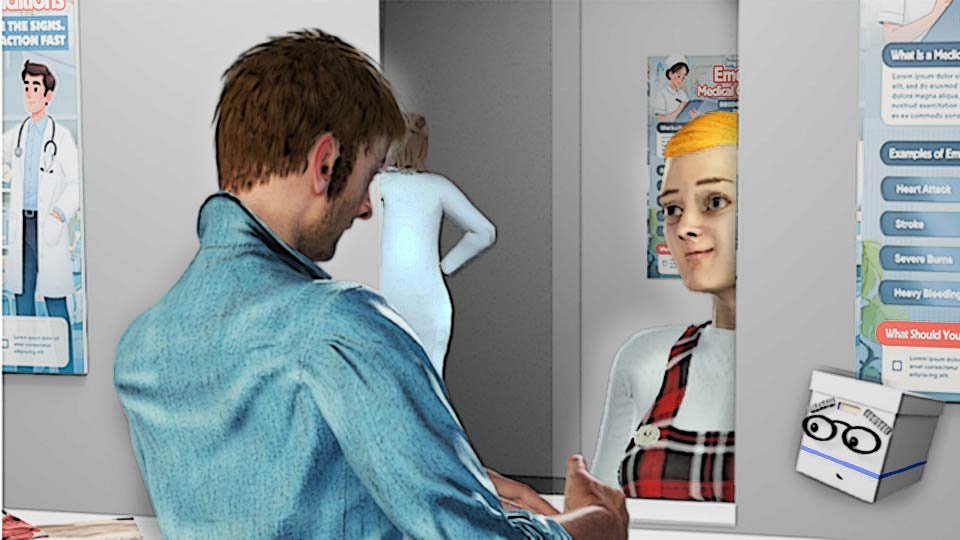
Marty is standing at an urgent care reception window, alone, for the first time in his life, holding his insurance card out like it’s a magic key that should unlock the whole visit for free.

The receptionist, who is also making eyes at him in a way he has not fully registered because he is currently panicking about money, says the number “$25” out loud.

Marty blinks. He has insurance. He pays for it every month. Why does he also owe money right now, standing here, before anyone’s even looked at the ankle he’s fairly sure he sprained? The honest answer is that he’s about to meet three different insurance words, only one of which applies to this exact moment, and nobody ever sat him down to explain the difference.

💵 The Copay: The One That Applies to Marty, Right Now

A copay is a flat, fixed fee you pay at the time of a visit — $25, $40, whatever your specific plan sets for that type of visit — regardless of anything else going on with your insurance.

It doesn’t care whether you’ve met your deductible.

It doesn’t care whether this is your first doctor visit of the year or your tenth.

It’s simply the toll for walking through the door for this specific kind of appointment, due today, at the window, before you’re called back.

That’s exactly why the receptionist is asking Marty for $25 right now, insurance card already on file and everything — the copay isn’t a sign that something’s wrong with his coverage. It’s just how his plan is built.

🏥 The Deductible: The Bigger Number Working in the Background

A deductible is the amount you have to pay out of your own pocket, across the whole year, before your insurance starts covering a bigger share of your bills.

Think of it as a threshold that has to be crossed once, not a fee charged every visit.

A $1,500 deductible means you’re paying close to full price for covered care until your out-of-pocket total hits $1,500 for the year — after that, your insurance starts picking up much more of the tab.

Copays sometimes count toward that total and sometimes don’t, depending on the specific plan, which is worth checking rather than assuming either way.

📊 Coinsurance: The Percentage Split That Shows Up After the Deductible

Coinsurance is a percentage split between you and your insurance company, and it only kicks in after your deductible has actually been met.

A common setup is 80/20 — insurance pays 80% of a covered bill, you pay the remaining 20%.

So, say the procedure is $2,500. You pay $1,500 to meet the deductible. After that, your insurance pays 80% of the remaining a $1,000, which leaves you owing $200 instead of the full amount. On that procedure, you’re insurance picked up $800 you would otherwise have had to pay.

Coinsurance is the reason two people with “good insurance” can still owe wildly different amounts for the same procedure — it depends entirely on where each of them stands against their own deductible that year.

🧩 Why All Three Can Apply to the Same Plan

Here’s the part that actually trips people up, Marty included.

These three are separate mechanisms that can all exist on one single insurance plan, kicking in at different moments. The copay is due today, at this visit, full stop.

The deductible is a running yearly total, quietly tracking every dollar you’ve paid out of pocket so far.

Coinsurance only shows up once that deductible’s been crossed, splitting whatever comes next by percentage instead of a flat fee.

A single visit might only ever touch one of the three — which is exactly Marty’s situation right now, standing at a window, owing a flat $25 and nothing more complicated than that.

❓ What to Actually Do If You Don’t Have the $25 on You

Say so.

Genuinely, that’s the whole move.

Front desk staff hear “can you bill me for the copay” on a regular basis, and most offices have a completely normal process for it — they’ll bill you directly, or let you pay after the visit rather than before it.

It’s not an embarrassing conversation, no matter how much a nervous twenty-something at a reception window might imagine otherwise, distracted receptionist notwithstanding.

🔗 Related Reads

  • What a Deductible Actually Means
  • What “In-Network” Actually Means and Why It Matters
  • Reading Your Policy’s Declarations Page

ScrumbleDoc is part of the WhistleBump Group — find the rest of the family at WhistleBump.com.

51007

©2026 John D Reinhart/ScrumbleDoc.com — All rights reserved

What to Do Immediately After an Accident, Insurance-Wise

The five minutes right after a car accident are genuinely disorienting. Here’s the exact order of what to actually do.

Marty’s Firefly clipped a tree at exactly the wrong angle, and now he’s standing on the sidewalk with one hand on his head, staring at a hood that used to be flat and is now shaped more like a taco.

His mind is completely blank, and not in a calm way — in the specific, buzzing way where you’re absolutely certain there’s a correct sequence of things you’re supposed to be doing right now, and you cannot, under any circumstances, remember a single one of them. He also doesn’t know what half the words on his insurance card mean. Let’s fix both problems.

🚨 Step One: Safety, Before Anything Else

Check yourself and anyone else involved for injuries first, before paperwork or insurance enter the picture at all.

If anyone’s hurt, or there’s real doubt, call 911.

If the vehicles are drivable and safe to move, get them out of active traffic. If they’re not, leave them exactly where they are and turn on your hazard lights. Nothing else on this list matters until this step is handled.

📞 Step Two: Call the Police, Even for a Minor Accident

A police report is genuinely useful even for a small, seemingly obvious accident — it’s an official, neutral, third-party record of what happened, and that becomes valuable if there’s ever any disagreement about fault later.

“Fault” just means whose driving actually caused the accident, which sounds obvious in the moment and gets surprisingly contested later once two insurance companies are involved.

Some states legally require a report above a certain damage amount. When in doubt, get one anyway.

🔄 Step Three: Exchange the Right Information

Get the other driver’s name, phone number, insurance company and policy number (the specific account number tied to their coverage, found on their insurance card), and license plate.

Share the same information about yourself.

You generally don’t need to discuss who was at fault at the scene at all — that’s genuinely not your job to determine standing on a sidewalk with a taco-shaped hood next to you. That’s what the police report and the insurance companies are for.

📸 Step Four: Document Everything, Right There, On the Spot

Photos of both vehicles, all visible damage, the license plates, the surrounding scene, and anything relevant nearby — a stop sign, a tree, skid marks.

This is the exact documentation an adjuster will lean on later.

An adjuster, in plain terms, is the insurance company’s own investigator, the person whose entire job is figuring out what actually happened and what it’ll cost to fix. Photos taken in the moment are far more convincing to that person than anything reconstructed from memory two days later.

👀 Step Five: Get Witness Info, If Anyone Saw It

If anyone witnessed the accident and is willing, grab their name and phone number too.

A neutral third party’s account can matter a lot if the other driver’s version of events doesn’t match yours once both insurance companies start asking questions.

📱 Step Six: Call Your Insurance Company, Even If You Weren’t at Fault

Report the accident to your own insurer regardless of who caused it.

This isn’t the same thing as admitting fault — it’s simply opening a claim, which is just the formal term for “officially telling my insurance company this happened so they can start figuring out what gets paid for and by whom.”

Calling promptly gets your own company aware and involved from the very start, instead of finding out about it secondhand once the other driver’s insurer calls them first.

🛠️ Gear Worth Having

Automotive Accident Report Log Book — a physical, glovebox-ready guide that walks you through exactly this checklist when your brain, understandably, isn’t at its sharpest.

As an Amazon affiliate, I earn from qualifying purchases. Thank you for supporting ScrumbleDoc.

A dash cam, if you’ve got one, does a lot of this documentation work automatically — worth reading GrumblePark‘s take on defensive driving basics if you’re thinking about adding one.

🔗 Related Reads

  • How a Claim Actually Works, Start to Finish
  • Auto Insurance: What Liability, Collision, and Comprehensive Each Cover
  • What a Deductible Actually Means

ScrumbleDoc is part of the WhistleBump Group — find the rest of the family at WhistleBump.com.

51001

©2026 John D Reinhart/ScrumbleDoc.com — All rights reserved

Auto Insurance: What Liability, Collision, and Comprehensive Each Cover

Liability, collision, and comprehensive sound like three flavors of the same thing. They actually cover three completely different scenarios.

Marty’s insurance agent rattled off three words. Liability. Collision. Comprehensive. Maybe some combination of all three.

She said it with the breezy confidence of someone who’d explained this a thousand times before. She moved on before Marty could admit something important. He genuinely could not tell those three words apart. He picked one at random.

He is now standing on a sidewalk watching his car burn, holding a folder of paperwork, quietly hoping he picked the right one.

⚖️ Liability: Covers the Other Person, Not You

Liability coverage pays for damage or injury you cause to someone else. Their car. Their property. Their medical bills.

It only applies if you’re at fault in the accident.

Here’s the part that trips people up: it does not pay for your own car’s damage at all. Not a dollar of it. This is also the one coverage nearly every state legally requires you to carry, at some minimum level, just to be allowed to drive.

💥 Collision: Covers Your Car, In a Collision

Collision coverage pays to fix your own vehicle after it hits something. Another car. A guardrail. A tree.

It doesn’t matter who was actually at fault. This is the coverage that answers one specific question: who pays to fix my car after I hit something.

☔ Comprehensive: Covers Everything Else That Can Happen to a Car

Comprehensive covers damage to your car from causes other than a collision. Theft. Vandalism. Fire — yes, like Marty’s, currently, on the sidewalk.

A tree branch falling on it. Hail. Hitting a deer. It’s genuinely the broadest of the three. Think of it as covering the whole category of “things that happen to a car that isn’t even driving at the time.”

🧩 Why People Say “Full Coverage”

“Full coverage” isn’t an official policy type. You can’t call an agent and ask for it by that exact name.

It’s just informal shorthand for carrying all three — liability, collision, and comprehensive — together. That combination covers the widest range of situations. The name is a description, not a product.

🚗 Why a Car’s Value Actually Matters to This Decision

Collision and comprehensive both come with their own deductibles. They both come with their own monthly costs, on top of liability. That cost is worth weighing against what your actual car is worth.

Carrying full collision and comprehensive on a car worth $1,500 total means something specific: you could be paying meaningful monthly premiums to protect a car that wouldn’t cost much to simply replace outright.

Marty’s Beetle, the one that burned up right before his eyes, might have been exactly this kind of car. We’ll never know now.

🔗 Related Reads

  • What a Deductible Actually Means
  • What to Do Immediately After an Accident, Insurance-Wise
  • Why Your Premium Goes Up (Even When You Haven’t Filed a Claim)

ScrumbleDoc is part of the WhistleBump Group — find the rest of the family at WhistleBump.com.

51006

©2026 John D Reinhart/ScrumbleDoc.com — All rights reserved