

Skip to content

scrumbledoc.com

From bills and bank statements to building credit, you're farther along than you think!

scrumbledoc.com

Tag: avoid bank fees

Overdraft Fees: How They Happen and How to Avoid Them

Overdraft fees feel like they come out of nowhere. They don’t — there’s a specific mechanism behind every single one.

Overdraft Fees: How They Happen and How to Avoid Them

Marty checked his balance on a Tuesday, saw a number that felt comfortably, respectably positive, bought groceries on Wednesday like a functioning adult, and got hit with a $35 fee on Thursday for a transaction his bank swore had knocked him into the negative. He hadn’t felt broke. He’d felt like a guy with enough money for groceries. Turns out “enough money for groceries,” according to his bank, is a more philosophical question than it should be.

📉 What Overdraft Actually Means

Overdrafting means spending more than what’s actually available in your account, with the bank quietly covering the gap for you. For a fee. Almost always somewhere between $30 and $35 per instance, not per dollar over.

So overdrafting by four dollars and overdrafting by four hundred dollars can cost you the exact same $35, which feels less like a fee and more like a cover charge for a club you never wanted to enter.

And whether your card even gets approved when you’re running low is entirely the bank’s call, not yours — you find out after the fact, not at the register.

⏳ The Timing Gap That Actually Causes Most of These

Here’s the part that trips almost everyone up: your balance on the screen doesn’t update in real time, no matter how confidently your phone displays it.

A pending transaction — a hold from a gas station, a check that hasn’t fully cleared yet, a subscription that quietly charges a day later than you remembered signing up for — can mean your real, spendable balance is lower than the number staring back at you, through absolutely no fault of your own.

🔁 One Overdraft Can Quietly Become Several

If more than one transaction tries to process while your account is already negative, some banks charge a separate overdraft fee for each one — not once for the whole mess, but once per transaction.

That’s exactly how one miscalculated purchase turns into $100-plus in fees over a day or two, seemingly multiplying on its own while you weren’t looking.

🛡️ Overdraft Protection: A Real Option, With a Real Tradeoff

Many banks offer something called “overdraft protection” — usually linking your checking account to a savings account or credit card, so a shortfall automatically pulls from there instead of triggering the fee.

It’s a genuinely useful option.

It is not, however, automatically free — it often comes with its own smaller transfer fee, so it’s worth reading the actual terms instead of assuming the word “protection” means “no strings attached.”

🚫 Opting Out Entirely Is Also a Real Option

For debit card purchases specifically, you can usually opt out of overdraft coverage altogether — meaning a purchase that would overdraft your account just gets declined on the spot instead of quietly approved with a $35 surprise attached.

Plenty of people genuinely prefer this trade: a moment of checkout embarrassment now over a silent charge you discover a week later, fully formed and unapologetic.

🔔 The Habit That Actually Prevents Most of This

Turning on low-balance alerts — nearly every bank offers this as a free text or push notification — catches the problem before it happens instead of after, which is the only version of this problem worth having.

It’s a five-minute setup that solves the exact timing-gap issue causing most accidental overdrafts in the first place.

Set it, forget it, and let your phone do the panicking on your behalf.

🔗 Related Reads

  • How to Actually Read a Bank Statement
  • Minimum Balances and Fees: The Fine Print Nobody Reads
  • Checking vs. Savings: What Each Account Is Actually For

ScrumbleDoc is part of the WhistleBump Group — find the rest of the family at WhistleBump.com.

50003

©2026 John D Reinhart/ScrumbleDoc.com — All rights reserved
Author jdreinhart73@gmail.comPosted on August 25, 2026September 4, 2026Categories BANKSTags avoid bank fees, bank overdraft explained, checking account overdraft, how to avoid overdraft fees, negative balance fees, overdraft alerts, overdraft fee amount, overdraft fees, overdraft protection, overdraft vs insufficient funds, spending more than you have, what is overdraft1 Comment on Overdraft Fees: How They Happen and How to Avoid Them

Minimum Balances and Fees: The Fine Print Nobody Reads

That “free” checking account might not be as free as it sounded. Here’s the fine print worth actually reading.

Minimum Balances and Fees: The Fine Print Nobody Reads

Alexa opened what her bank cheerfully called a “free checking account,” and eight months later got hit with a $12 charge she could not explain to save her life.

Turned out “free” had an asterisk on it this entire time — a tiny, quiet asterisk, sitting in a document she never once opened, patiently waiting for its moment. That moment was a Tuesday. It picked a Tuesday.

💵 What a Minimum Balance Requirement Actually Means

Some “free” accounts only waive their monthly fee if you keep a certain amount sitting in the account at all times — commonly somewhere between $300 and $1,500, depending on the bank and the account type.

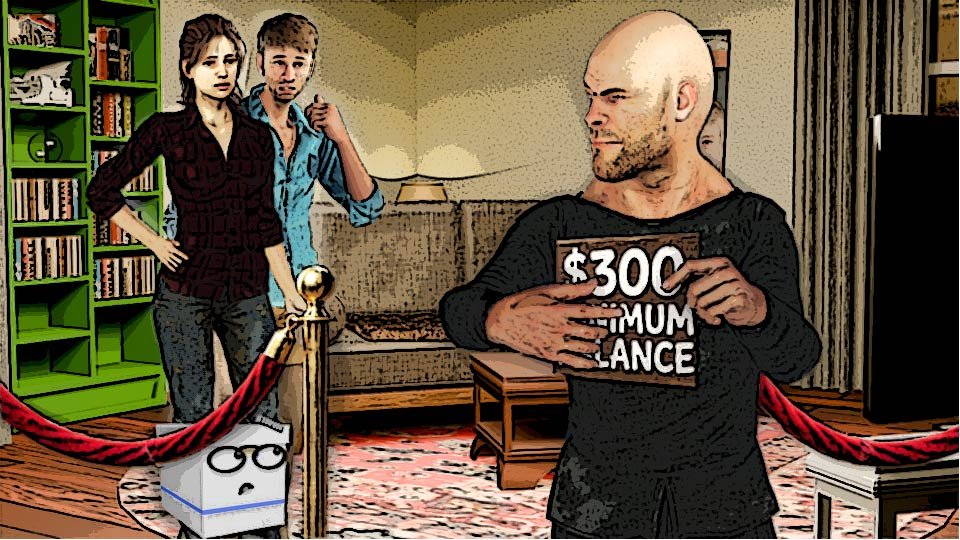
Think of it less like a fee and more like a bouncer checking your balance at the door every single day. Dip below the line, even for one day, even by a dollar, and the fee can apply for the entire month — not just the day you dipped.

🧾 The Other Common Way “Free” Isn’t Free

Minimum balance isn’t the only trapdoor. Plenty of banks waive the monthly fee a completely different way instead — a minimum number of debit card purchases each month (often somewhere around 10, though it varies), or a direct deposit of a certain size landing on a regular schedule.

Miss whichever specific condition your account actually runs on, and the fee shows up anyway. Which means two people can both proudly say they have the same “free checking account” at the same bank, and one of them is paying $12 a month for the privilege of not reading the fine print.

📄 Where This Information Is Actually Written Down

Every account comes with a document — usually called something like a “Fee Schedule” or “Account Disclosure” — that spells all of this out.

Nobody reads it.

It was built, structurally, to not be read; that’s basically its whole design philosophy. But it’s genuinely worth an actual read (not a scroll-past-and-click) when you open an account.

That’s because it’s the one document that answers the only question that actually matters here: what, specifically, would make this account start costing me money?

🔍 How to Check What’s Already Happening on Your Own Account

Already have an account and not sure what’s going on with it? Your monthly statement will show any fee that got charged, along with its name.

Take that exact fee name to your bank’s website or a quick customer service call, and they’ll tell you exactly what triggered it — and, more usefully, exactly what avoids it going forward.

✅ The Actual Fix, Once You Know the Rule

Once you know your specific account’s actual requirement, meeting it is usually pretty simple — keeping a slightly higher cushion in checking, or actually double-checking that direct deposit is set up rather than just assuming it is.

The fee was never random. It was a rule, written down somewhere in a document with a boring name, that nobody ever bothered explaining out loud. Now someone has.

You’re welcome, and also, sorry about the $12.

🔗 Related Reads

  • How to Actually Read a Bank Statement
  • Overdraft Fees: How They Happen and How to Avoid Them
  • Choosing a Bank: What Actually Matters Beyond the Free Toaster

ScrumbleDoc is part of the WhistleBump Group — find the rest of the family at Whistlebump.com.

50006

©2026 John D Reinhart/ScrumbleDoc.com — All rights reserved

Author jdreinhart73@gmail.comPosted on August 25, 2026September 4, 2026Categories BANKSTags avoid bank fees, bank account fees explained, bank account requirements, bank fee waiver, checking account fine print, free checking account catch, hidden bank fees, how to avoid monthly fees, inimum balance fees, minimum balance requirement, monthly maintenance fee, monthly service feeLeave a comment on Minimum Balances and Fees: The Fine Print Nobody Reads
scrumbledoc.com Proudly powered by WordPress